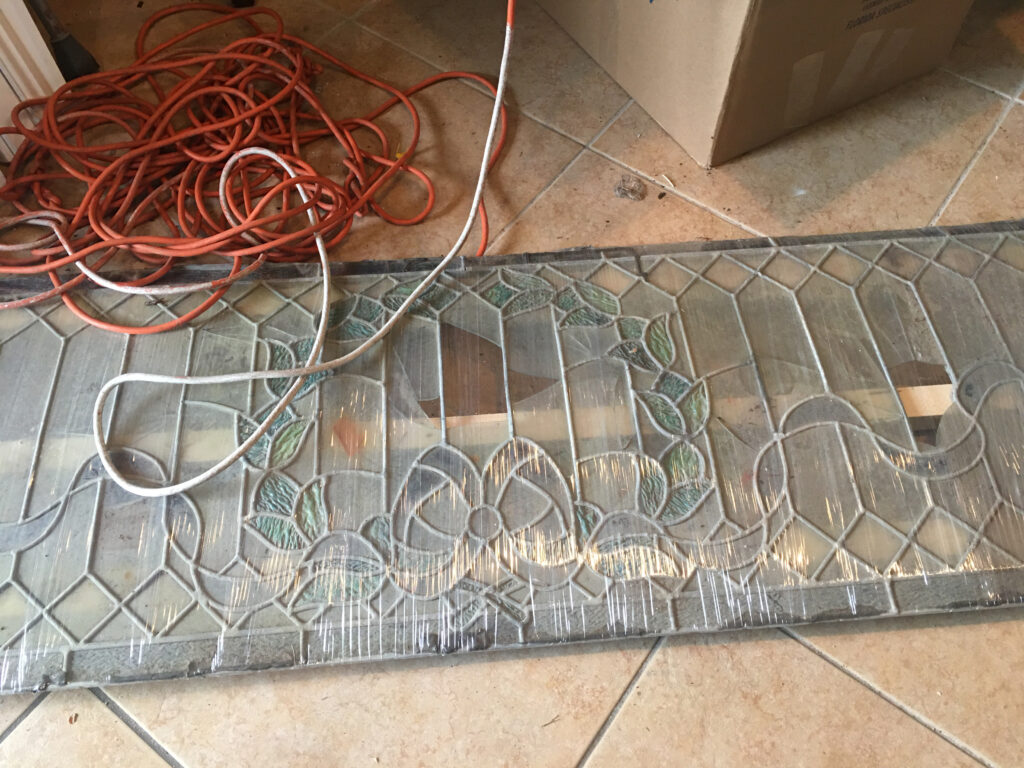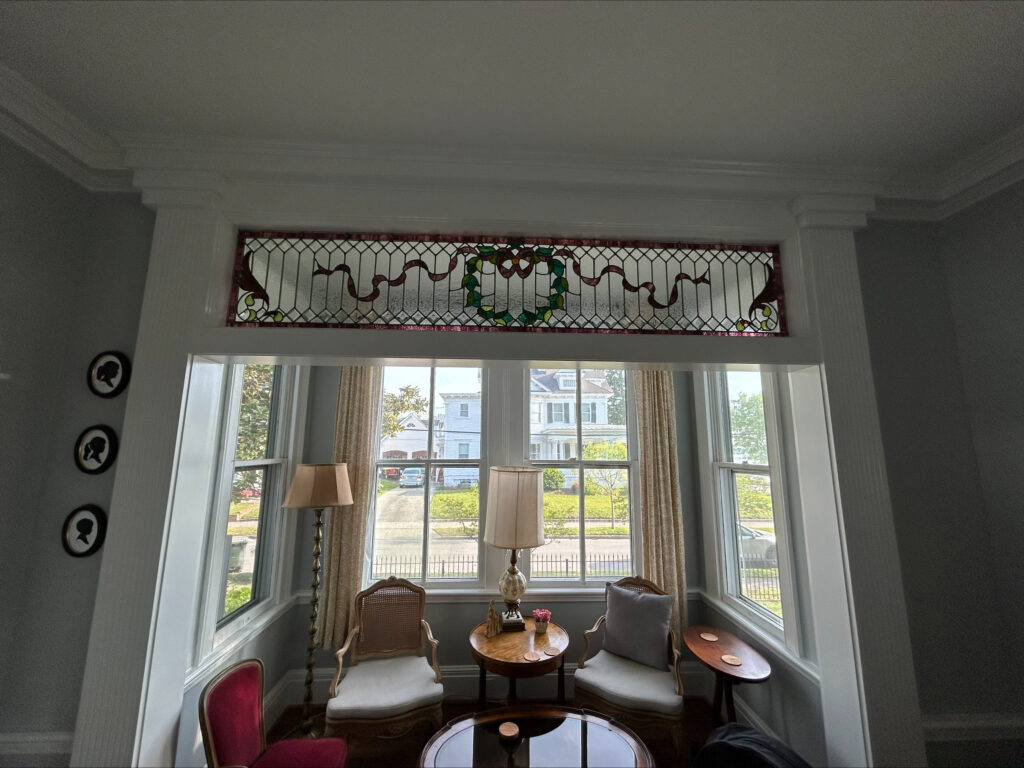
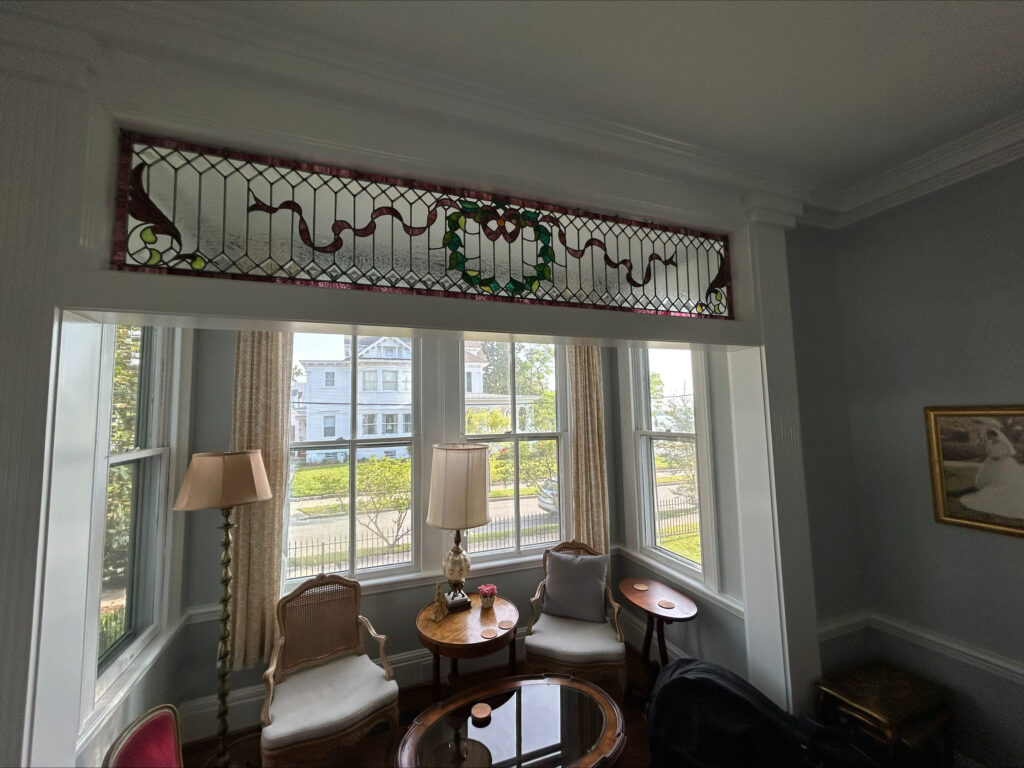
Some stained glass tells a story the moment you see it. This Victorian transom, dated to around 1910, is one of those pieces. It is not only beautiful, it represents a specific moment in American glassmaking when new techniques and mass production made decorative glass more accessible for homes.
Why stained glass moved from churches into homes
For much of the 1800s, stained glass work was primarily ecclesiastical. As the late 1800s progressed, glassblowers and studios expanded beyond church commissions and began creating decorative windows for private residences. This shift helped form a secondary market for homeowners who wanted artistry, privacy, and light in the same opening.
Many early American glass artists and factories were concentrated along the East Coast. Over time, production expanded into other regions, especially where operating costs were lower and manufacturing infrastructure was growing.
What glue chip glass is, and why it matters
This transom includes glue chip glass, a textured style known for its frosted, fern-like pattern that diffuses light and adds privacy. Glue chip became especially associated with American decorative glass after the late 1800s.
Two important names tied to this technique are Rawson & Evans Co. of Chicago. They are credited with advancing the glue chip process for very large window panes, and they received a patent in 1891 tied to their approach to the process.
A practical clue for dating older stained glass
When you see original glue chip glass in an old stained glass panel, it often suggests the work was created sometime after 1890. It is one reason glue chip can be helpful when estimating the era of a window, especially when it appears alongside other early 1900s design cues.
A North Carolina connection: glass made in Laurinburg
Another detail that makes this transom especially meaningful is its North Carolina connection. Glue chip glass for this Victorian transom was produced in Laurinburg, North Carolina, which is about 161 miles from New Bern. At the time, Pilkington Glass Factory in Laurinburg was the only factory producing glue chip glass.
The factory later closed during the Great Depression in 1930 and was purchased by a Japanese glass company. That history adds another layer to why preserving original glass matters. Once these materials are gone, the story goes with them.
The colored glass: Wissmach and early American production
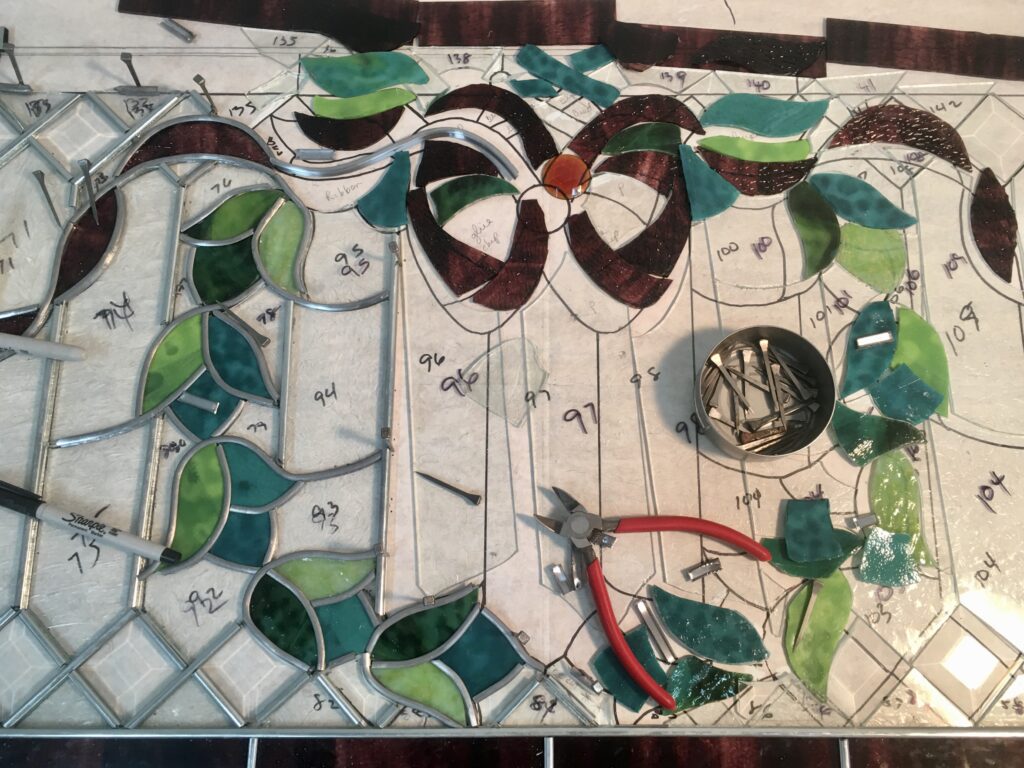
The glass for the flower wreath, along with the turquoise ripple glass and blue-green flowers, leaves, and ribbon, was produced by the Wissmach Glass Factory. Wissmach began in 1904 in the Ohio Valley and relocated to West Virginia in 1910, where they continue producing colored glass today.
Wissmach still makes turquoise and wine tones similar to what was used in this transom. As with any hand-made glass, color can vary slightly from batch to batch. When restoration requires replacement, the goal is always a respectful match that keeps the piece cohesive and historically aligned.
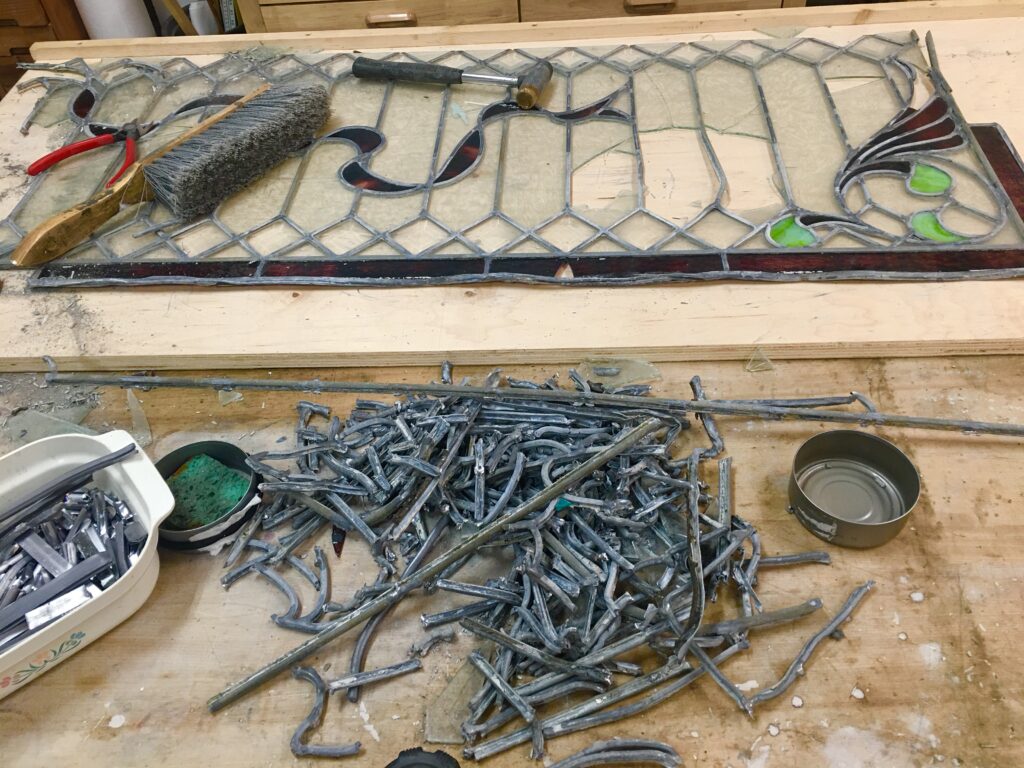
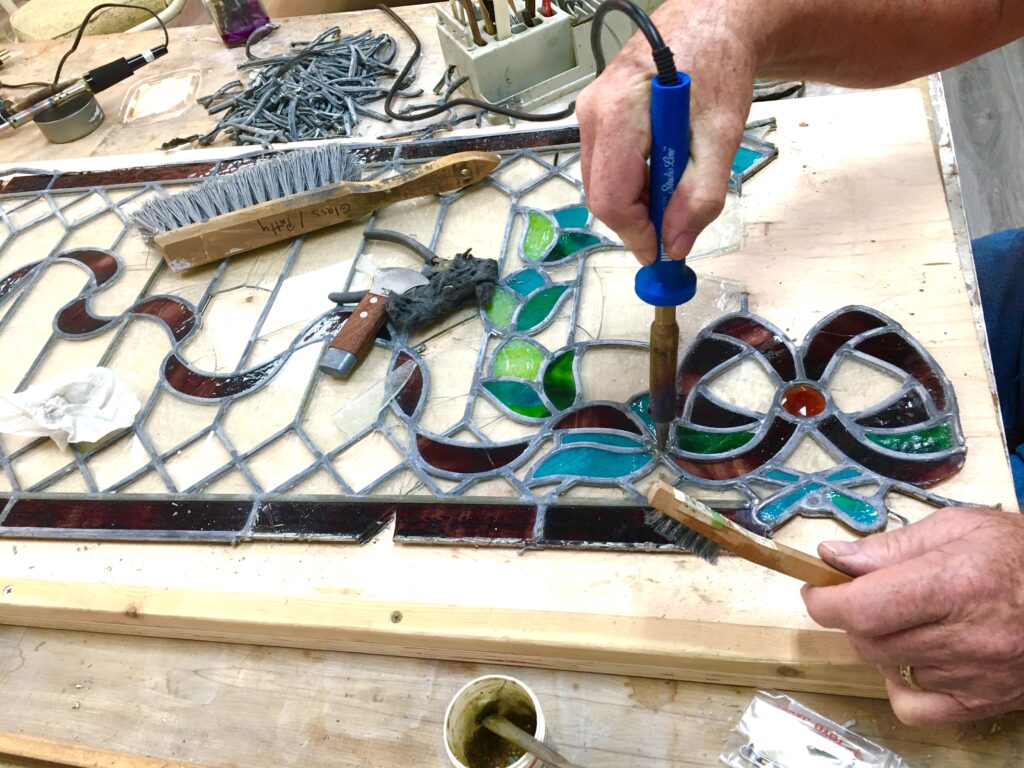
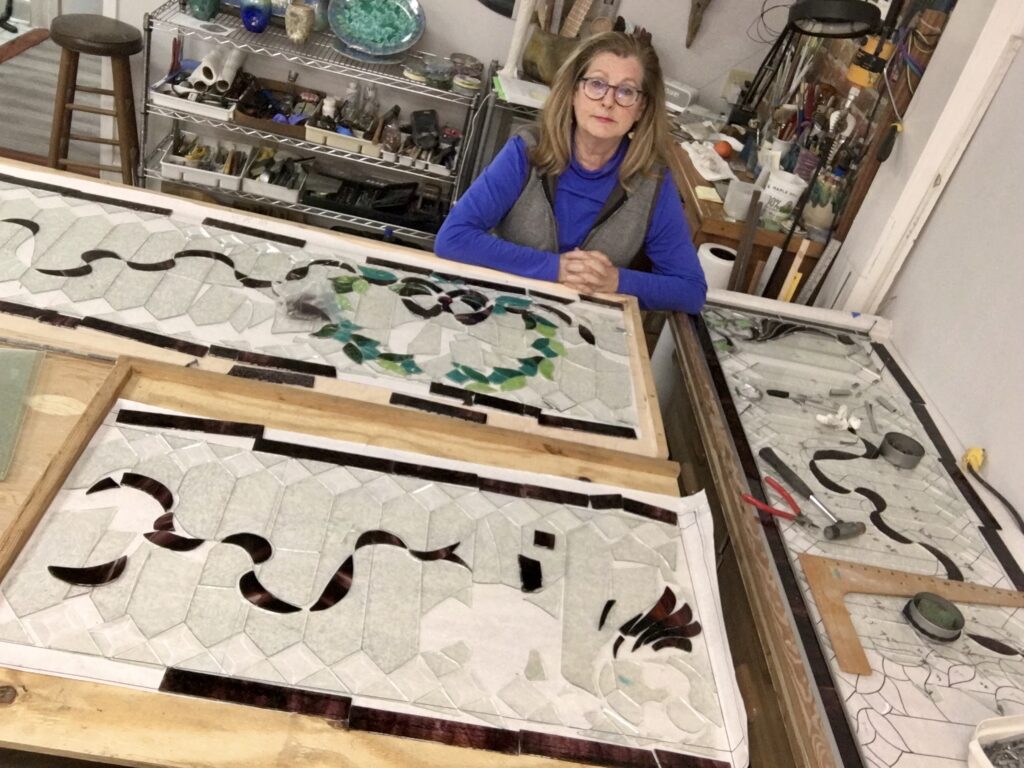
Restoration focus: preserve the character, stabilize the window
With historic stained glass, restoration is not about making a piece look brand new. It is about protecting the integrity of the design and ensuring the window can be enjoyed for decades to come.
Common restoration goals for older transoms
- Preserve original glass whenever possible
- Stabilize lead lines and structural points that carry stress
- Replace only what is necessary and match textures and tones carefully
- Maintain the original feel of the period and craftsmanship
Care tips for glue chip and textured glass
Glue chip glass is beautiful, but it is also a texture that deserves gentle care.
- Use a soft cloth and mild soap with water
- Avoid abrasive pads and harsh chemicals
- Do not scrape textured areas
- If you notice movement, rattling, or new gaps, address it early
Frequently asked questions
What is glue chip glass?
Glue chip glass is a textured glass created through a process that leaves a frosted, leaf-like pattern. It diffuses light and improves privacy while still feeling bright.
Can glue chip glass be repaired if it is cracked?
In some cases, cracked glass can be stabilized, but it depends on the crack location and the stress points in the panel. When replacement is necessary, matching texture and transparency is the priority.
How can glue chip glass help date stained glass?
Original glue chip glass is often associated with work created after about 1890. It should be considered alongside other factors like design style, lead profile, and provenance.
How do I clean stained glass in a transom safely?
Use mild soap and water with a soft cloth. Avoid harsh cleaners, and never use abrasive tools on textured glass.
Have a historic transom or stained glass panel you want to preserve?
If you have a vintage transom, door panel, or stained glass window that needs restoration, Studio M can help you understand what you have, what condition it is in, and what options make sense for preservation. To get started, send a few photos and any measurements you have through the contact form.